Showing posts with label January. Show all posts

Monday, January 9, 2023

Activities for January 2023


Happy New Year 2023!  To celebrate the new year, we are going to explore some of the Asian New Year's Celebration Traditions. We are also going to look into famous women to celebrate the coming Women’s History Month in March. We will use lines, shapes, symmetry, patterns, and symbolism to create our artwork.  Scroll down for the lesson details.  

Chinese New Year 2023

Sunday, January 22

Year of the Rabbit


Lesson 1-2 / Dates

January 3 – January 20

Big Idea:

VA.2/3/4/5.C – Critical Thinking and Reflection

VA.2/3/4/5.S – Skills, Techniques, and Processes

VA.2/3/4/5.F – Innovation, Technology, and the Future


Essential Questions:

What is the role of the Visual Arts in Ancient traditions?

How can we honor the icons of Women’s History Month through our artwork?

How can we create art to promote public awareness of the community?


Benchmarks:

VA.2.C.3.2, VA.3.C.2.3, VA.4.C.1.1, VA.5.C.2.2

VA.2.S.1.3, VA.3.S.2.2, VA.4.S.1.3, VA.5.S.1.4

VA.2.F.3.1, VA.3.F.3.1, VA.4.F.3.1, VA.5.F.3.1


Art History & Art Appreciation Connections:

Art History Kids: Women in Art History,

7 Women Artists Who Changed History,

Tate Kids: Discovery 5 Amazing Women Artists that Changed the Art World!

Vocabulary:

Genre: Portraiture,

Artistic Style:   Abstract

Media/TechniqueDrawing, Digital art

Design Elements: LineShapeColorProportion/Scale

Design Principles: Balance

Other: Women’s History Month, Culture, Heritage


Activity

2nd-3rd Grade: Create an artwork inspired by the Chinese New Year including a Rabbit and an Ox.

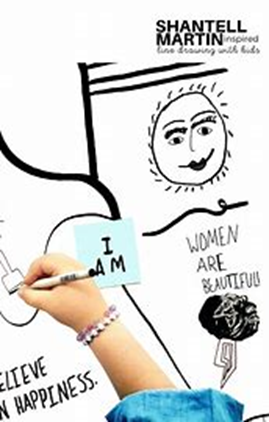
4th-5th Grade: Create an artwork inspired by Shantell Martin’s style including the theme Celebrating Women who Tell our Stories and including Rabbits to symbolize the new year.


Historical Art / Artist Reference
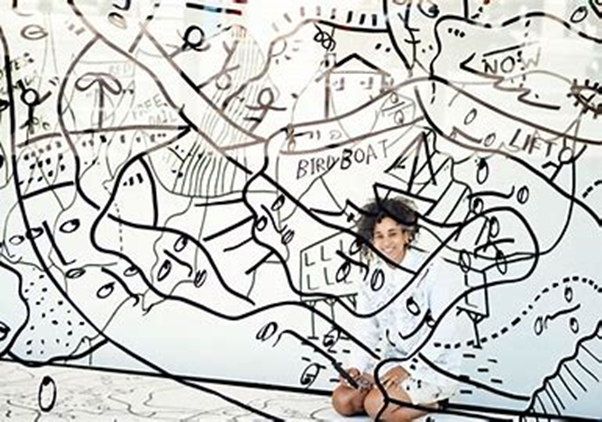
Shantell Martin

Materials

· White Paper 9” X 12”

· Pencils

· Black Markers
 

Steps

1) Sketch ideas inspired by the resources (Click on the blue links)

2) Design the final story using lines and shapes

3) Trace all lines in black

Lesson 3-4 / Dates

January 24 – February 3

Big Idea:

VA.2/3/4/5.O – Organizational Structure

VA.2/3/4/5.S – Skills, Techniques, and Processes

VA.2/3/4/5.H – Historical and Global Connections


Essential Questions:

How can we use art to celebrate Haitian culture?

How do artists create works based on cultural and life experiences?

What is the connection between art and culture?


Benchmarks:

VA.2. S.1.3, VA.3. S.2.1, VA.4. S.2.2, VA.5. S.3.1

VA.2. O.3.1, VA.3. O.2.1, VA.4. O.2.1, VA.5 F.1.1

VA.2. H.2.1, VA.3. H.1.1, VA.4. H.2.1, VA.5. H.1.3


Art History & Art Appreciation Connections:

Haitian Artist Notebook, Inspicio Arts: Haitian Gingerbread, The Real Haiti for Kids, Haiti Facts for Kids, Image and Culture: University of Wyoming Art Museum, Types of Haitian Art, The Story of Haitian Metal Art


Vocabulary:

Genre: Landscape

Artistic Style:   Realism

Media/TechniqueDrawing, Digital art, 3D structures

Design Elements: LineShapeColorProportion/Scale

Design Principles: Balance

Other: Architecture, Collage, Sketch, Haitian Independence, Culture, Heritage


Activity

2nd-3rd Grade: Create a collage of a gingerbread style house 

4th-5th Grade: Group project – Use Engineering Design Process Worksheet

Parameters: Design a steady Gingerbread house style prototype maximum size of 10”X10”, that will use wind energy to aerate the indoors. The structure needs to sustain the force of an air blower for 1 minute.

1) Sketch a gingerbread house that uses a novel aeration system

2) Create a 3D prototype using Tinkercad

    5th Grade Class link: https://www.tinkercad.com/joinclass/LST7IZE8F

    4th Grade Class link: https://www.tinkercad.com/joinclass/1BF4I74VQ

    Click here: How to use Tinkercad to build a house

                         3) Build a final cardboard prototype


Historical Art / Artist Reference

Featured Arts/Artists 

Haitian Artist Notebook


Materials

· White and Colored Papers 9” X 12”

· Recycled Cardboards

· Scissors

· Glue

· Markers


Steps

Follow the Engineering Process Sheet instructions to

1)         Sketch your house

2)         Create a prototype using Tinkercad

3)         Build a cardboard house prototype

Critique

Critique the finished houses

Enrichment Projects

Explore other ways of expressing Asian and Haitian cultures through art


SDI Projects

Practice drawing lines and shapes and writing in cursive

Value of the Month

Click HERE to view a video about the Pursuit of Excellence

How can you display the Pursuit of Excellence during art classes?


Monday, January 3, 2022

Activities for January 2022


Happy New Year 2022!  Woohoo! To celebrate the new year we are going to explore some of the Asian New Year's Celebration Traditions.   We will create a project mash-up with the Japanese art of Notan and the Japanese artist Yayoi Kusama! We will use more shapes, symmetry, and patterns to draw and build a Pop-Up Book.  Scroll down for the lesson details.  


Lesson 1-2 / Dates
January 3 – January 20

Essential Question
What is the role of the Visual Arts in Ancient traditions?

                                                    Chinese New Year 2022
              Tuesday, February 1


Lesson 1-2 / Dates
January 3 – January 14

Activity
Create an an Notan/Kusama style abstract art


        Historical Art / Artist Reference

Featured Arts/Artists

Notan

Nōtan (濃淡) is a Japanese design concept involving the play and placement of light and dark elements as they are placed next to the other in the composition of art and imagery.

Kusama

Yayoi Kusama (草間 彌生, Kusama Yayoi is a Japanese contemporary artist who works primarily in sculpture and installation.

Examples of Notan-Kusama Designs


Materials
· Multi-Colored Papers
· Colored Pencils
· Scissors
· Glue Stick


Steps
1) Trace a square paper into a complementary paper
2) Design a few shapes
3) Cut off and glue the shapes
4) Use colored pencils to color the designs


Vocabulary (Click on links for definitions)

Genre n/a

Artistic Style:   Abstract

Content/Meaning: n/a

Media/TechniqueDrawing


Lesson 3-4 / Dates
January 18 – February 4

Essential Question
What are the connections among the arts and other disciplines?


Click HERE to follow the steps to create a professional looking Pop-Up Book
Or copy paste: https://www.sciencefriday.com/educational-resources/pop-up-book-engineering/ 

Click HERE for online sites to create your own e-book

Example for the cover: https://youtu.be/7w2Ue7OaHSk

Example for the pages: https://youtu.be/yqB6bNxP9fE

Example for the book: https://youtu.be/rwOLXsrsTxU

V.A. Standards
Big Idea: Connections among the arts and other disciplines strengthen learning and the ability to transfer knowledge and skills to and from other fields.

VA.2.S.1.2- Use diverse resources to inspire expression of personal ideas and experiences in works of art.

VA.3.S.1.2- Use diverse resources to inspire artistic expression and achieve varied results.

VA.4.H.3.1-Discuss how analytical skills and thinking strategies are applied to both art production and problem-solving in other content areas.

VA.5.H.3.1-Discuss how skills learned through the analysis and art-making process are used to solve problems in non-art areas.

Correlated STEM Standards
Science: SC.2.P.13.4 Demonstrate that the Greater the Applied Force, the Greater the Change in Motion 
SC.3.P.10.1 Identify Forms of Energy
SC.4.P.12.1 Objects in Motion
SC.5.P.13.2 Changes in Motion  

Technology: LAFS.3.RL.1.1/1.2
Engineering:4.RL.2.5
Math: MAFS.2.MD.1.1 - A. Measure the Length
MAFS.3.MD.1.1 - C. Measure Length
MAFS.4.OA.3.5 - E. Symmetry
MAFS.5.MD.2.2 - C. Numerical Patterns

Activity
Create a a Pop-Up Book about Native Florida Species

Materials
· Multi-Colored Papers
· Colored Pencils
· Scissors
· Ruler
· Glue Stick
· Clear Tape

Steps
1-Take the 20 cm x 20 cm pieces of paper and fold both in half neatly and
accurately. 
2- On one of the sheets, mark two points: 5 cm up and 5 cm down from the
center of the fold. 
3 - On the same sheet, mark two more points: 5 cm right and 5 cm left
of the center of the fold. 
4 - Draw diagonal lines connecting all four points. 
5 - Fold the paper together and use scissors to cut along the center of the diamond. 
6 - Cut from the center point out toward the point where the diagonal lines connect. 
7 - Use the back of the scissors to score the marked lines, and fold along the scored lines. 
     When the finished work is opened, the mouth will open. 
8 - Glue a sheet with the mouth to the other sheet of paper. 
     Avoid gluing the mouth to be sure it will pop open.


                    Endangered Species
                   
                    Birds:
                    Ivory Billed-Woodpecker
                    Kirtland's Warbler
                    Red Cockaded Woodpecker
                    Bachman's Warbler
                   
                    Invertebrates:
                        Miami-Blue Butterfly
                    
                   Critical Species:
                    
                        Fish:
                        Largetooth Sawfish
                        Nassau Grouper
                        
                        Mammals:
                        Florida Panther
                        West Indian Manatee
                     
                        Reptiles:
                       American Alligator
                   American Crocodile
                   Green Sea Turtle
                   Eastern Indigo Snake


Home Learning
Due Date: February 4

1) Learn vocabulary words

2) Reading assignment:  

3) Sketchbook: Practice creating other book designs


Art careers related to the unit


Critique
Critique the finished Books
Enrichment Projects
Explore other ways of expressing Asian culture through art and/or explore anime styles

SDI Projects
Practice drawing lines and shapes and writing in cursive

BIO

Values Matter

Value of the Month

Click HERE to view a video about the Pursuit of Excellence
How can you display the Pursuit of Excellence during art classes?
Reference: Values Matter