Monday, October 1, 2018

Activities for October 2018

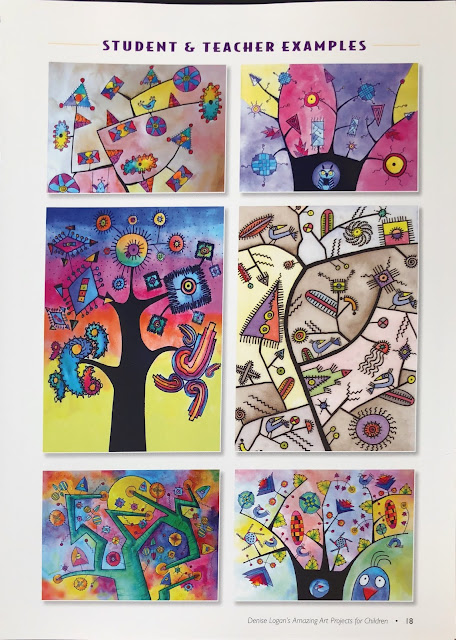
Hello Fall! October brings a series of art activities. We are first going to continue celebrating Hispanic Heritage month by finishing our colorful reptiles.  Then we are going to work on the Red Ribbon Week and Walk Safe Poster Contests. The Doodle for Google Contest is optional.  Finally we are going to create our own Fall Klee Trees. Make sure you check the "Gallery" section of this blog to view some of your work. October is going to be fun!


 Lessons

Lesson 1-4 / Dates
October 22 – November 13

Essential Question
How do you show a message through Art?

Visual Arts Standards
Big Idea: Critical Thinking and Reflection
VA.2.H.3.1- Describe connections made between creating with art ideas and creating with information from other content areas.
VA.3.H.3.1- Discuss how knowledge gained in the visual art classroom can serve as prior knowledge in other classrooms.
VA.4.H.3.1-Discuss how analytical skills and thinking strategies are applied to both art production and problem-solving in other content areas.
VA.5.H.3.1-Discuss how skills learned through the analysis and art-making process are used to solve problems in non-art areas.
.
Landscape with Yellow Birds (1923) Paul Klee
Correlated L.A. Standards
LAFS.2.RL.1.3/2.5/3.7, LAFS.2.RI.1.1/1.2/2.5
LAFS.3.RL.1.1/1.3/3.7, LAFS.3.L.3.4.a&d
LAFS.4.RL.1.1/1.3/3.7, LAFS.4.L.3.5c
LAFS.5.RL.1.1/1.3/3.7 LAFS.5.L.3.4a&c

Vocabulary (Click on links for definitions)
Genre:  n/a
Artistic Style:   Contemporary Art
Content/Meaning: Imaginary
Media/Technique: Drawing, Colored Pencils / Art Stix, Markers

Historical Art / Artist Reference

Visuals & Resources
1.     Visuals: Teacher samples

2.     Websites: Paul Klee , Images
3.     Video: 


Activity
Create a Klee inspired tree

Materials

· White watercolor paper 9"X12"
· Pencil
· Sharpie
· Watercolor pencils
· Brush
· Cup of water

Steps
1) Draw your design


2) Trace your lines with a sharpie

3) Color sky with watercolor pencils

4) Color details with watercolor markers


Enrichment Projects
Choose contest to enter: Authentic Assessments 

SDI Projects
Practice drawing lines and shapes and writing in cursive


Values Matter


Value of the Month

How can you display responsibility during art classes?
Reference: Values Matter

Tuesday, September 4, 2018

Activities for September 2018

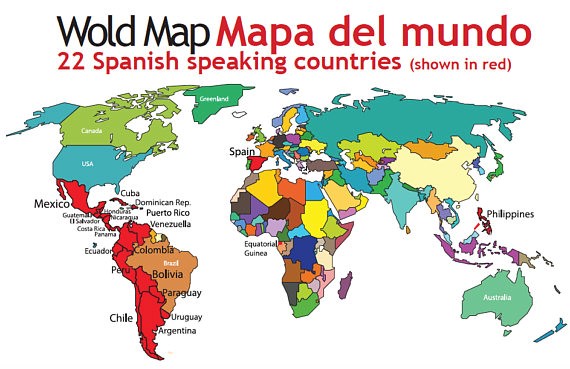
Welcome to September! We are celebrating Hispanic Heritage Month from September 15 to October 15 by creating S.T.E.A.M. (Science, Technology, Engineering, Art, Math) inspired projects. 

As we create and build our artworks, we will pay special attention to lines, shapes, contrast and forms.  Refer to our Lessons for 2nd/3rd graders and 4th/5th graders below.


September 15 was chosen as the starting point for the celebration because it is the anniversary of independence of five Latin American countries:
Costa Rica, El Salvador, Guatemala, Honduras and Nicaragua. They all declared independence in 1821. In addition, Mexico, Chile and Belize celebrate their independence days on September 16, September 18, and September 21, respectively.[1]
Hispanic Heritage Month also celebrates the long and important presence of Hispanic and Latino Americans in North America, starting with the discovery of America by Christopher Columbus on the morning of October 12, 1492.  (Ref: https://en.wikipedia.org/wiki/National_Hispanic_Heritage_Month)
The term Hispanic broadly refers to the people, nations, and cultures that have a historical link to Spain.

Learn more about Hispanic Heritage Month at: http://www.hispanicheritagemonth.org/


Image result for 2nd 3rd grade lesson
Sept 4 – Sep 21

Essential Question
What are traditions? What is The Day of the Dead?

V.A. Standards
Big Idea: Through study in the arts, we learn about and honor others and the worlds in which they live(d).
VA.2.H.1.1- Identify examples in which artists have created works based on cultural and life experiences.
VA.3.H.1.1- Describe cultural similarities and differences in works of art.

Correlated L.A. Standards
LAFS.2.RL.1.3/2.5/3.7, LAFS.2.RI.1.1/1.2/2.5
LAFS.3.RL.1.1/1.3/3.7, LAFS.3.L.3.4.a&d


Vocabulary (Click on links for definitions)
Artistic Style:  Abstract
Content/Meaning: Literal

Media/Technique: Drawing, Collage
Other:  Geometric shapes, Latin America, Traditions, Culture

Historical Art / Artist Reference

Visuals/Resources
1.     Visuals: Teacher sample
2.     Websites: Hispanic Heritage Month
3.     Videos: Coco

Activity
Create a Day of the Dead Head

Materials

·         White, black paper 6”X9”
·         Multi colored papers
·         Markers
·         Sharpie
·         Scissors
·         Glue stick


Steps
1) Draw the shape of the head on a white piece of paper
2) Draw different shapes on various colored paper for decorations
3) Cut out and glue shapes on black paper
4) Draw detailed designs

Home Learning
Due Date: September 21
1) Learn vocabulary words
2) Reading assignment: Latin America   
3) Sketchbook: Practice illustrating other styles of Mexican Art

Art careers related to the unit

Critique
Critique the finished artwork

Enrichment Projects

Explore and create artifacts about other Hispanic traditions
             
SDI Projects
Practice drawing lines and shapes and writing in cursive


Image result for 4th 5th grade lesson

Lessons 1-3 / Dates
Sept 4 – Sep 21

Essential Question
What are traditions? What is The Day of the Dead?

V.A. Standards
Big Idea: Through study in the arts, we learn about and honor others and the worlds in which they live(d).
VA.4.H.1.1-Identify historical and cultural influences that have inspired artists to produce works of art.
VA.5.H.1.1-Examine historical and cultural influences that inspire artists and their work..
Correlated L.A. Standards
LAFS.4.RL.1.1/1.3/3.7, LAFS.4.L.3.5c
LAFS.5.RL.1.1/1.3/3.7 LAFS.5.L.3.4a&c

Science: SC.4.L.16.4 Compare and contrast the major stages in the life cycles
Technology: SC.35.CS-CC.1.1 Identify technology tools for individual and collaborative data collection, writing, communication, and publishing activities.
Engineering: SC.35.CS-CS.1.2  Describe how models and simulations can be used to solve real-world issues in science and engineering.
Art: VA.4.H.1.1 Identify historical and cultural influences that have inspired artists to produce works of art.
Math: MAFS.4.G.1.1 Draw points, lines, line segments, rays, angles

Vocabulary (Click on links for definitions)
Artistic Style:  Abstract
Content/Meaning: Literal

Media/Technique: Drawing, Collage
Other:  Geometric shapes, Latin America, Traditions, Culture

Historical Art / Artist Reference

Visuals/Resources
1.     Visuals: Teacher sample
2.     Websites: Hispanic Heritage Month
3.     Videos: Coco

Activity

Materials

·         White paper 8”X10”
·         Multi colored papers
·         Markers
·         Scissors
·         Glue stick
·         Hole Puncher
·         Fasteners


Steps
1) Trace shapes
2) Color, decorate
3) Cut out shapes
4) Punch holes
5) Tie in fasteners
6) Create video presentation

Home Learning
Due Date: September 21
1) Learn vocabulary words
2) Reading assignment: Hispanic Heritage Month        
3) Sketchbook: Practice illustrating other styles of Mexican Art

Art careers related to the unit

Critique
Critique the finished artwork
Enrichment Projects
             
SDI Projects
Practice drawing lines and shapes and writing in cursive

Lesson 1-3 / Dates
September 24-October 12

Essential Question
How do we use folk art today?

V.A. Standards

Big Idea: The arts are inherently experiential and actively engage learners in the processes of creating, interpreting, and responding to art.
VA.2.S.1.1- Experiment with tools and techniques as part of art-making processes.
VA.3.S.1.1- Manipulate tools and media to enhance communication in personal artworks.
VA.4.S.1.1-Manipulate tools and materials to achieve diverse effects in personal works of art.
VA.5.S.1.1-Use various art tools, media, and techniques to discover how different choices change the effect on the meaning of an artwork.


Correlated L.A. Standards
LAFS.2.RL.1.3/2.5/3.7, LAFS.2.RI.1.1/1.2/2.5
LAFS.3.RL.1.1/1.3/3.7, LAFS.3.L.3.4.a&d
LAFS.4.RL.1.1/1.3/3.7, LAFS.4.L.3.5c
LAFS.5.RL.1.1/1.3/3.7 LAFS.5.L.3.4a&c


Vocabulary (Click on links for definitions)
Artistic Style:   Utilitarian/Functional
Content/Meaning: Figurative
Media/Technique: Craft
Other:  Geometric Shapes, Foreground, Background
Image result for contrast color wheel
Historical Art / Artist Reference

Visuals/Resources
1.     Visuals: Teacher sample
2.     Websites: Fun Reptile Facts for Kids
3.     Video: All About Reptiles

Activity
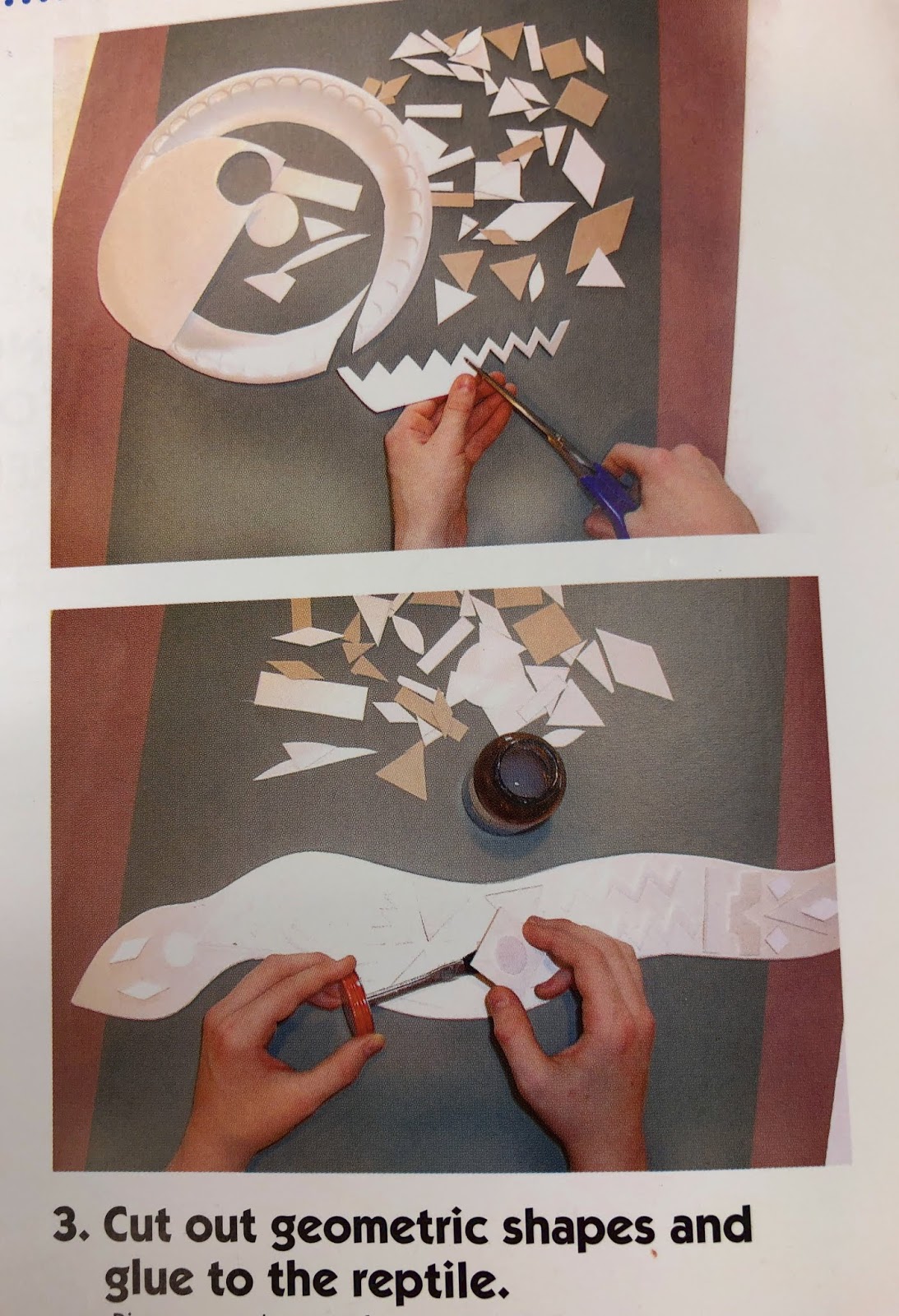
Create a folk-art style reptile

Materials

· Black paper 9”X12” / 18”X24”
· Pencil
· Art Stix
· Red, orange, yellow, green & blue papers 6”X9”
· Glue sticks/scissors

Steps
1) Draw a snake or lizard
2) Cut and glue geometric shapes
3) Decorate with Art Stix
4) Glue on color background


Home Learning
Due Date: October 12
1) Learn vocabulary words
2) Reading assignment: a) Folk Art Definition , What is Folk Art?

Art careers related to the unit

Critique
Critique the finished folk-art style lizard

Enrichment Projects

Explore other folk-art styles

SDI Projects
Practice drawing lines and shapes and writing in cursive

Values Matter

Value of the Month

Which values are displayed in the Mayan/Aztec structures that we are using for our lesson unit?
Reference: Values Matter